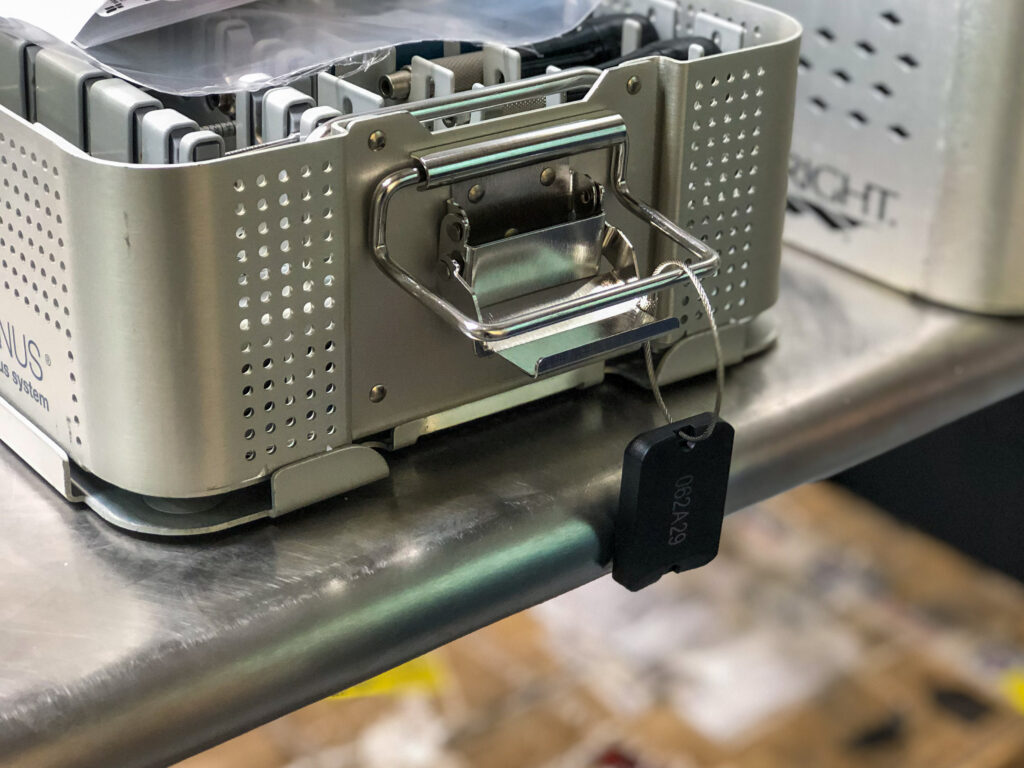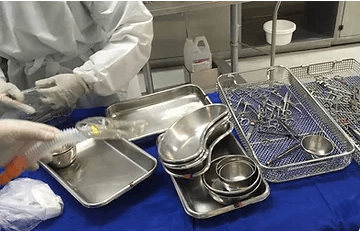
Medical-device manufacturers, loaner-system operators and hospitals can capture each tagged asset at defined read points to support faster inventory checks, clearer handoffs and a traceable reprocessing history.
The RFID tag supplies the durable identity and read event. Loaner-management, sterile-processing or hospital software associates that identity with the set contents, workflow status and required records. See how this architecture supports surgical-tray reprocessing at hospital scale.
Xerafy provides compact and ultra-rugged autoclavable RFID tags for reusable medical assets such as trays, cases, containers, with engineering support for tag placement, attachment and read-performance testing.
What Does an Instrument Tracking System Do?
An instrument tracking system connects the RFID identity of a surgical tray, set, container or reusable medical device with its master record in loaner-management, sterile-processing or hospital software. RFID readers capture that identity at defined workflow handoffs without requiring direct line-of-sight scanning.
Each read event records that the asset was detected at a specific RFID read point and time. The software uses these events to support:
- Inventory and Availability: Identify which trays, sets and devices have been received, issued, stored or returned.
- Workflow Status: Associate each asset with its current sterile-processing, storage, distribution or loaner-management stage.
- Set Association: Connect each tray or container with the expected contents, procedure-specific records and relevant UDI data for medical devices.
- Reprocessing History: Build a record of sterilization cycles, inspections and workflow handoffs. Tag selection and testing must reflect the relevant sterilization methods and exposure conditions.
- Loaner and Consignment Control: Track the movement of manufacturer-owned trays, devices and implants between distribution points and healthcare facilities.
- Lifecycle Management: Maintain usage, maintenance, repair and retirement information for reusable assets.
Tray-level identification provides a scalable foundation for instrument tracking systems by giving each set a persistent identity throughout its operational lifecycle. Item-level identification can then be added selectively where the instrument, workflow and validation requirements justify it.
Instrument Tracking Systems in Sterile Processing Departments
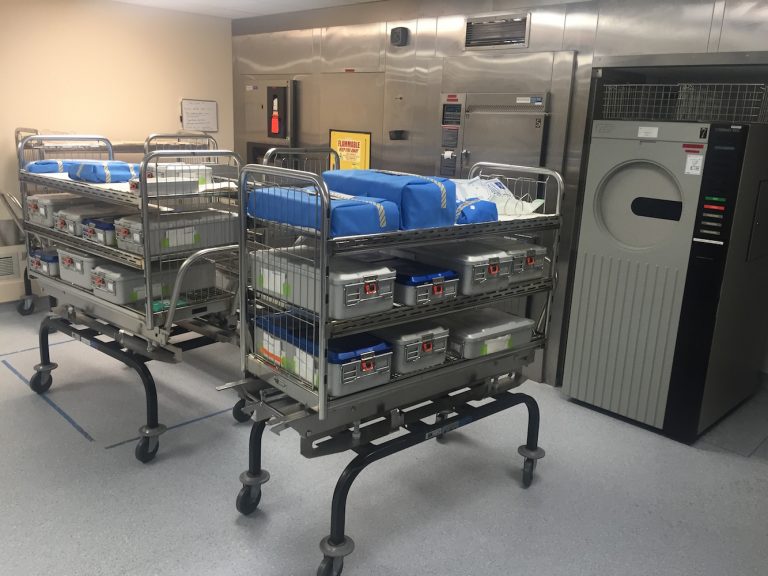
Sterile Processing Departments move surgical trays and containers through receiving, decontamination, inspection, assembly, sterilization, storage, issue and return.
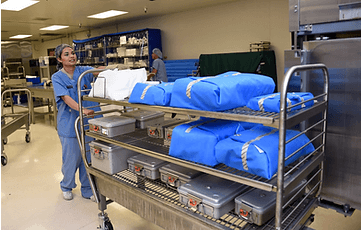
An instrument tracking system captures each tagged tray at defined workflow handoffs, creating a time-stamped history that can be shared with sterile-processing, loaner-management and hospital systems.
- Receiving and Decontamination: Record trays and containers entering the department, including loaner sets received from medical-device manufacturers or distributors.
- Inspection and Assembly: Present the expected set information and work instructions associated with each tray while technicians inspect, assemble and document the set.
- Sterilization: Associate the tray identity with the relevant sterilization cycle and processing record.
- Storage and Issue: Record when trays enter sterile storage and when they are issued for a scheduled procedure.
- Return and Reconciliation: Capture trays returning from the operating room or leaving the facility, supporting reconciliation of hospital-owned and loaner inventory.
RFID supplies the durable identity and automated read event. Inspection, set verification, cycle validation and workflow records remain managed by sterile-processing staff and the connected systems responsible for each process.
The tag must remain readable and securely attached throughout repeated cleaning, sterilization and handling cycles.
Compact MICRO Medical and ultra-rugged ROSWELL Autoclavable formats provide different starting points according to the tray material, geometry, available mounting space and required read performance.
MICRO Medical – Designed specifically for medical device manufacturers, this compact tag ensures seamless integration and traceability while maintaining compliance with sterilization standards.
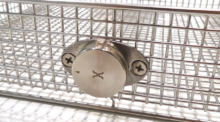
ROSWELL Autoclavable – An ultra-rugged tagging solution for all types of surgical trays and containers, this tag combines biocompatible materials with durability at the highest temperatures, optimizing workflow efficiency in the SPD.
Scheduling Surgical Trays and Medical Devices for the Operating Room
After reprocessing, surgical trays and devices move through sterile storage, case-cart preparation, operating-room staging and return. An instrument tracking system uses RFID read events to document these handoffs and connect each tagged asset with the relevant procedure schedule or preference list.
- Procedure Preparation: Identify the trays, loaner sets and reusable devices expected for a scheduled procedure.
- Availability Checks: Determine which tagged assets have reached sterile storage, case-cart assembly or the operating-room staging area.
- Loaner Coordination: Record the receipt, preparation, issue and return of manufacturer-owned trays and devices.
- Operating-Room Handoff: Capture when tagged trays and devices enter the clinical workflow and associate that event with the scheduled procedure.
- Post-Procedure Return: Record trays leaving the operating room and returning to sterile processing or the loaner provider.
RFID events captured at the point of care provide a time-stamped record of when tagged trays and devices reached an intended handoff. Tray contents, surgical counts, sterilization release and clinical checklists are documented through the procedures and systems assigned to each task.
This tray-level visibility helps sterile-processing and operating-room teams coordinate availability, reduce manual searches and respond earlier when an expected set has not been recorded at the required workflow stage.
How to Build an RFID Instrument Tracking System
An RFID instrument tracking system should be designed around the assets, workflow handoffs and system records required by medical-device manufacturers, loaner-system operators and healthcare providers.
1. Define the Identification Scope
Determine which assets require a persistent RFID identity. Tray-level programs typically cover surgical trays, sets, containers, cassettes, cases and reusable medical devices. Item-level identification can be added where the instrument geometry, workflow and validation requirements support it.
2. Map the Workflow and Read Points
Identify where each tagged asset should be captured across dispatch, receiving, decontamination, assembly, sterilization, storage, operating-room staging and return. Each read point should correspond to a defined operational handoff or system update.
3. Select the Tag, Placement and Attachment
Match the RFID tag to the asset material, geometry, available mounting area and required sterilization or cleaning cycles. Effective RFID tagging depends on testing the tag position, orientation and attachment method on representative trays, containers and devices.
Compact formats such as MICRO Autoclave suit applications with limited mounting space. ROSWELL Autoclavable provides a more rugged option for trays, cases and containers with demanding attachment and handling requirements. Where a standard format cannot meet the geometry, integration or attachment constraints, custom RFID engineering can adapt the tagging layer to the asset.
4. Test the Intended Read Environment
Evaluate the selected tag on representative assets using the intended readers, antennas and workflow configuration. Testing should account for orientation, dense metal populations, nearby items, movement through the read zone and performance after representative cleaning or sterilization exposure.
5. Connect RFID Events to the System Record
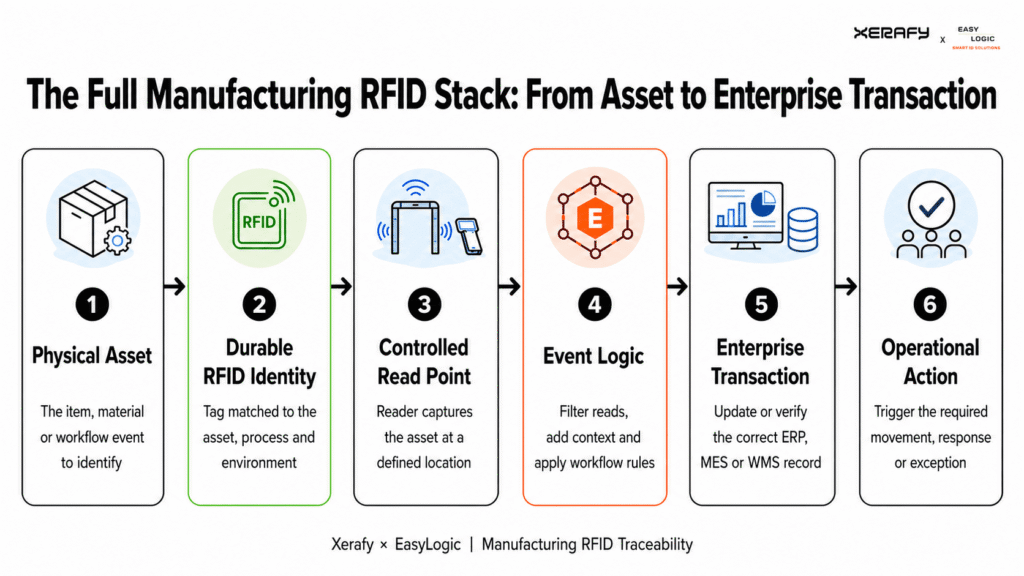
Associate each RFID identity with its master record in sterile-processing, loaner-management or hospital software. Middleware and business rules determine how a read event updates workflow status, generates an exception or triggers an operational action.
6. Define Pilot Acceptance Criteria
Agree on the required read performance, test population, exposure cycles, workflow stages and exception-handling process before the pilot begins. Use the results to confirm the tag configuration, reader setup and integration requirements before scaling.
How to Evaluate RFID for an Instrument Tracking System
A useful evaluation reproduces the intended assets, operating conditions and workflow handoffs. Test the complete tagging and read process using:
- Representative Assets: Include the tray materials, geometries, containers, cassettes and reusable devices expected in the program.
- Candidate Tag Positions: Compare available mounting locations, attachment methods and tag orientations.
- Reprocessing Conditions: Test the tag and attachment through representative cleaning, sterilization and handling cycles.
- Intended Read Environment: Use the planned readers, antennas, asset population and movement through each read zone.
- System Events: Confirm how each read updates the asset record, workflow status and exception-handling process.
- Acceptance Criteria: Define the required read performance, test population, exposure cycles and workflow outcomes before the pilot begins.
Planning an instrument tracking system?
Start with the Healthcare RFID Test Pack to compare tag formats, mounting methods, orientation and read performance on representative trays, containers and devices.
Ask Xerafy’s engineers to review the asset geometry, reprocessing conditions, identification scope, reader setup, system integration and pilot acceptance criteria.
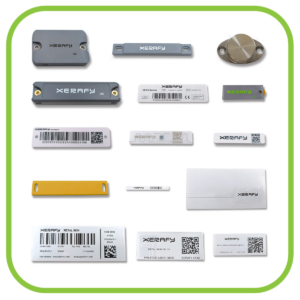
Xerafy designs and manufactures rugged RFID tags and specialty smart labels for healthcare and medical-device applications. Its RFID for healthcare portfolio includes autoclavable tag formats for surgical trays, cases and reusable assets, low-profile labels for packaging and supplies, and specialty formats for gamma, e-beam and other demanding exposure conditions.
Xerafy supports medical-device manufacturers, label converters, healthcare providers and RFID solution partners with tag selection, placement, attachment, personalization, custom engineering and RF performance testing from initial evaluation through scale-up.